
Whether you're starting an online store or have been in the game for a while, investing in an effective ecommerce marketing strategy is a crucial part of growing your business.
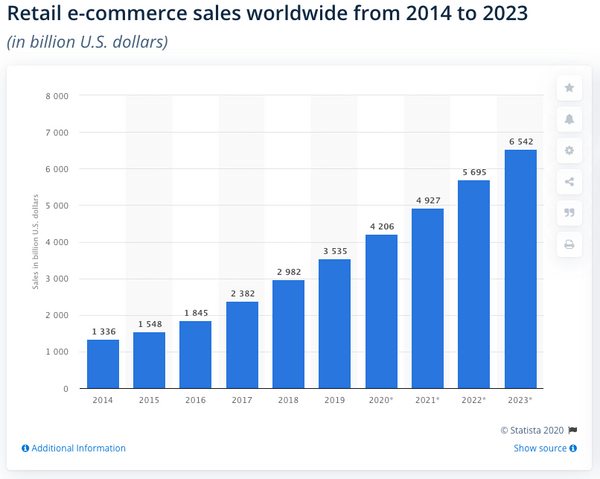
That said, there are around 24 million ecommerce stores across the globe—over 1,000,000 on Shopify alone. And recent data from Statista shows that it’s a $3.5 trillion industry, so everybody wants a piece of the pie.
Creating an ecommerce store isn’t a novelty anymore. There’s also no shortage of ecommerce platforms that make it easy to set up a store in no time.
But in fact, most live off crumbs as only 2.7% of ecommerce stores make more than $1000 in sales annually. What’s the reason for this alarming figure?
It’s that most of them set up a basic store, wing it and hope.
From our extensive experience helping businesses grow on Shopify, we’ve compiled our top 6 ecommerce marketing strategies in this article.
If you’re interested in finding out about tried-and-tested strategies to drive more traffic and sales for your business, then dive in.
List of points we cover in this article
- Increase conversions with personalisation
- Learn from your competitors
- Place an emphasis on email marketing
- Build the landing pages and the back end of the funnel
- Choose your ecommerce traffic strategies
- Track your funnel
1. Increase conversions with personalisation
On your second visit to a store, don’t you like it when the staff remembers you by name and gives you a personal experience? Doesn’t it make you feel special?
That’s exactly the level of personalisation customers expect online too.
But unfortunately, only about 5% of businesses implement personalisation extensively. As a result, they miss out on $756 billion a year.
Therefore, if you want to boost trust and increase revenue, you need to begin implementing personalisation tactics on your ecommerce store.
Here’s a company that has seen great success with personalization — Very.co.uk
This is how their website looks when someone visits on a warm day.
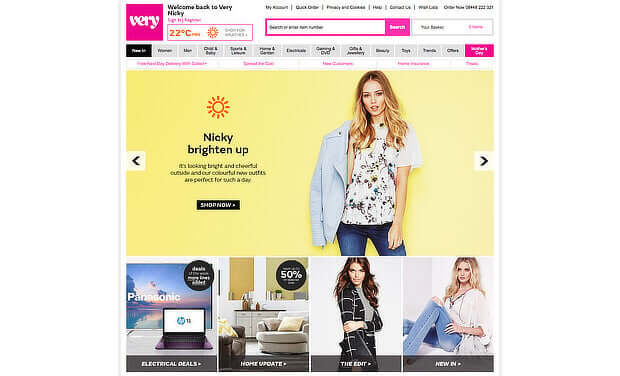
They mainly display clothing that would suit warm weather.
And here’s how it looks on a cold day.

Can you see the difference?
They also address the visitor as Nicky and take the browsing history into account.
This level of personalisation helps them display highly relevant products and generated £5 million through a significant increase in conversions.
2. Learn from your competitors
“If you know the enemy and know yourself, you need not fear the result of a hundred battles. If you know yourself but not the enemy, for every victory gained you will also suffer a defeat. If you know neither the enemy nor yourself, you will succumb in every battle.”
This was a quote from Sun Tzu in The Art of War.
Although he wrote this in reference to war, this applies to business as well. In fact, many business owners read this book.
Translating this into the business context, understanding your competitors is crucial to adapt and innovate. It's only when you know the main resources of your competition that you can differentiate yourself on price, service quality or product features.
How can you do this?
Examine your competitors' websites
Your top competitors are at their top game for a reason. They took the time to research their audience and study their competition and used the data from their own efforts over time to improve their strategy.
You can gain insights into the experience they offer customers by analysing their product descriptions, case studies, customer reviews, and testimonials. The homepage is often used to promote a business's most important selling point, so you can observe what's highlighted and why.
You are sure to find some hidden gems here. Use these to identify your unique value proposition and opportunities to differentiate your products, prices or service.
Learn about their SEO efforts
To gain a deeper understanding of where your competitors are placing their SEO efforts, you can use an SEO tool like Ubersuggest. 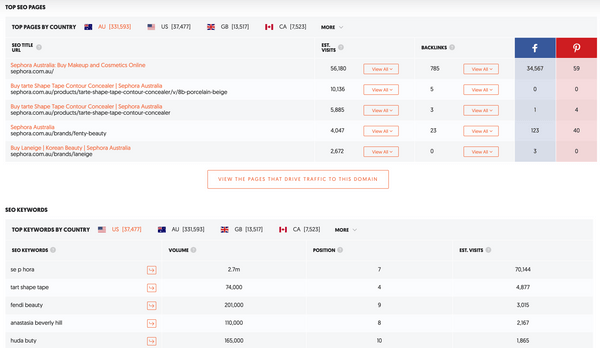
If the store is targeting certain keywords or is building links to a specific page, it shows that the marketing strategy for that page is working. You can then use these findings to develop your own strategy.
Make a note of all this data on a spreadsheet as you will need to use it while building the rest of the funnel.
Analyse your competitor's funnel
Visit the websites of your top competitors and go through the checkout process. This will show you what sort of upsells they use, special discounts they offer to get you to add to cart, the emails they send you, etc.
You can also abandon the cart or just visit the site and not do anything. This will help you learn what tactics they use to bring you back to the cart, and then use these ideas to shape your own strategies.
We know planning and setting up an ecommerce funnel can be time-consuming, so we've created a Funnel map from scratch to help you! Grab it below as part of our ecommerce essential kit.
3. Place an emphasis on email marketing
Traffic, traffic, traffic…
Everybody wants more traffic!
But no matter how much traffic you send to your website most of it won’t convert. The median ecommerce conversion rate ranges between 0.68% to 3.58% depending on the niche.
So, for every 100 visits, you should get about 1 to 4 sales.
Most people won’t convert to traffic because only a small percentage of the traffic you get is hot traffic.
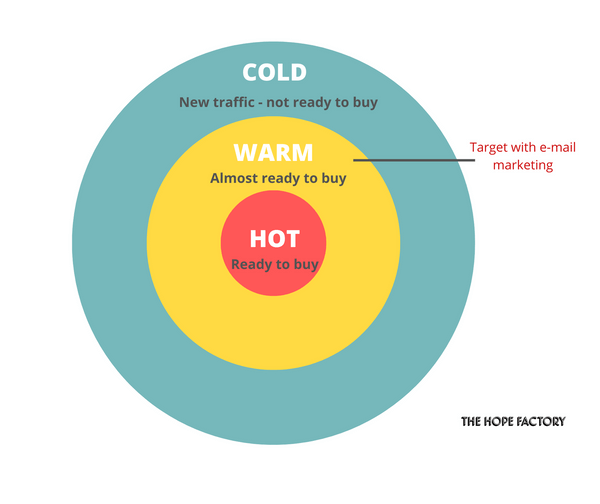
While hot traffic will convert to sales immediately, the warm and cold traffic is undecided.
They might not be ready to buy now, but might be in the future. And you need to be at the top of their mind when they do.
How do you do this, you ask?
By having a strategy in place to capture email leads. This will allow you to nurture them with email marketing so when they are ready to buy they will choose you over the competition.
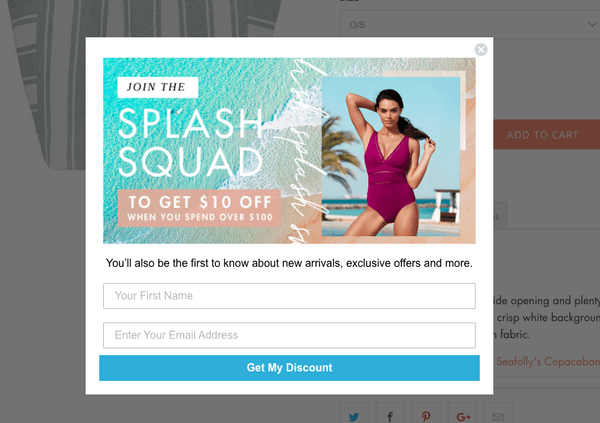
Use an email marketing platform like Klaviyo that’s specifically designed for ecommerce stores to set up lead captures like opt-in forms on your website.
Splish Splash Swimwear uses a Klaviyo pop-up that is set up to appear after a time delay. You can also use an exit-intent pop-up that appears when a visitor is about to leave the site.
Another example can be seen on the Cape Clasp website.
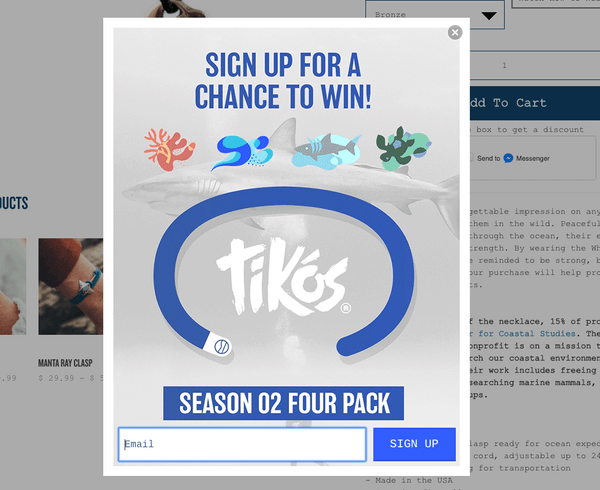
This way you can ensure that people who don’t buy will convert to email subscribers, who you can nurture and convert later.
Try and create several different popups and lead magnets.
Also, make sure you track clicks on these lead magnets.
This is super useful as the data can be used to send more relevant emails, thus keeping open rates high and unsubscriptions low.
Luckily with Klaviyo, tracking visitor’s behaviour is automated once they sign up. You can find out what pages of your site they’ve visited and encourage them to take the next step.
You can also segment your subscribers before they even sign up by running a quiz like Care/of does.
As soon as you visit their website you see the call to action for the quiz.
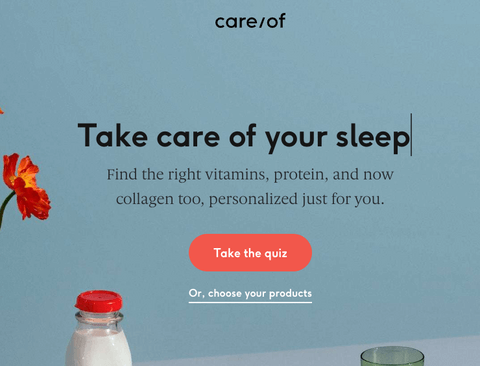
When you begin taking part, the quiz asks you questions like the one below to learn more about you.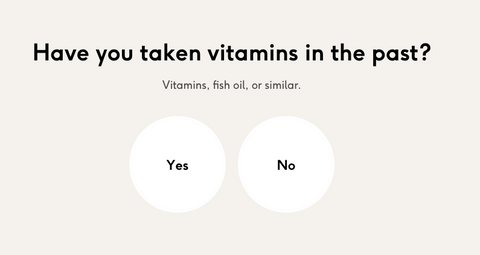
And once you are done, they ask you for your email address.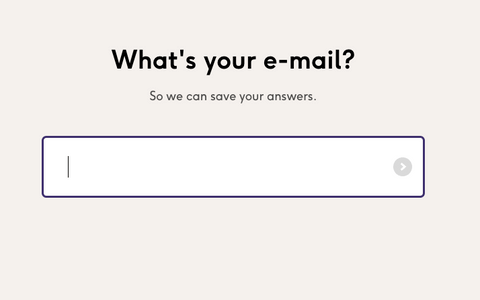
Now they can use all this information to pitch you highly relevant products via both email and retargeting.
4. Build the landing pages and the back end of the funnel
So, what about the hot traffic? How do you ensure that most of them convert?
You do this by building a sales funnel that works. A good sales will also get some of the warm traffic to convert. Here’s everything it should include...
A landing page
The landing page is one of the most important parts of the marketing funnel to convert traffic to sales. So, make sure you pay special attention to it. Here’s an example of a good landing page from NutriSeed.
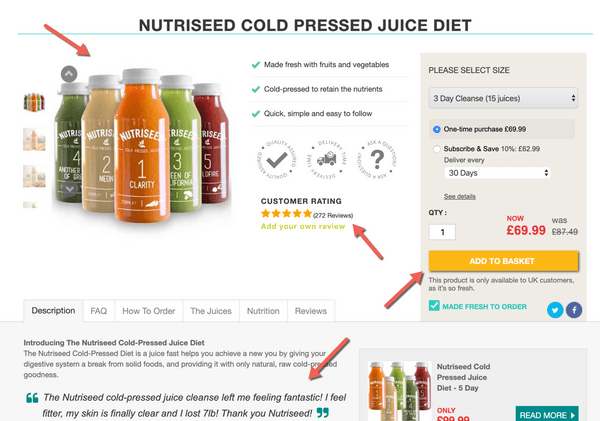
The big glossy photo gives people a good can look at the product before buying.
There’s also an ‘Add to Basket’ call to action right above the fold. And they display social proof in the form of customer ratings and a testimonial. Social proof is extremely important for an ecommerce landing page, especially while driving cold traffic. There’s also a nice short description of the product.
The only thing I would change about this landing page is to add a video. As videos can increase conversion rates by 80% according to EyeWideDigital.
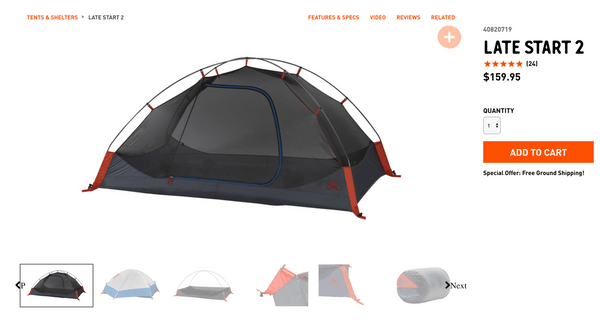
For some ecommerce video inspiration, you can check out the Kelty website. They display photos at the top of the landing page, and then a video of the product when you scroll down.

Upsells and Cross-sells
Would you like some fries and a drink with that burger? Fast-food employees automatically ask you that because upselling and cross-selling works at their stores.
But it works online too. Research from Forrester found that upsells and cross-sells contribute 30% of ecommerce revenue.
You should rely more on upsells though as they are 20 times more effective than cross-sells.
Here’s an example of upselling and cross-selling in work on the Pierre Herme website.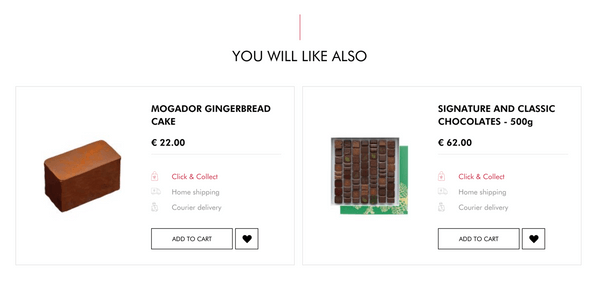 They are suggesting two other products I might like. One is less expensive than the product I am looking at (cross-sell), while the other is more (upsell).
I would add both to my cart. More chocolate for me!
Here's another example of a cross-sell we really like by Dots by Donna. Donna sells hand-drawn illustrations made up of layering thousands of dots. When customers select an illustration they are given an option to pair it with another piece that compliments it well.
Setting up upsells and cross-sells on Shopify are very easy as you have access to tools such as Bold Upsell.
Thank you pages
The thank you page people are directed to after they make the purchase has 2 roles mainly. One is to track the conversion rate of the landing page and the other to inform the buyer that the sale sailed through smoothly.
But there are many more ways you can use them, like for retargeting and upselling products.
A good example is this thank you page from Shutterfly.
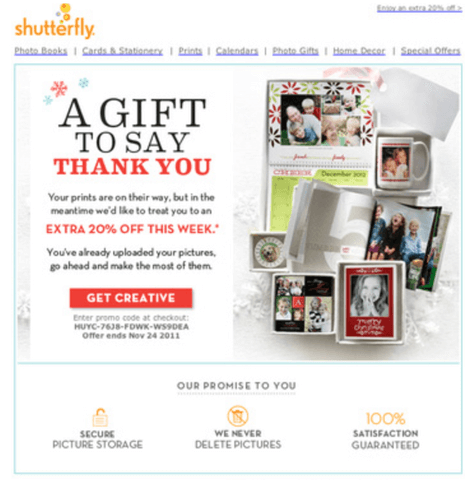
As you can see they thank buyers for their purchase and inform them that their product is on the way. They also upsell another product and offer a promo code to use at checkout.
Email series
After someone makes the purchase you will, of course, send them a thank you email and a receipt. But don’t stop there. Instead, continue sending them emails that will nurture them with helpful suggestions. When the time is right you can upsell more products.
5. Choose your ecommerce traffic strategies
Now you can think about traffic.
There are multiple traffic driving strategies you can put in place. Here are the best ones…
Paid Ads
Paid ads are one of the most effective strategies for driving traffic quickly. Ecommerce stores spend 39% of their search budget and 37% of their social budget on product ads.
Choose where you would like these ads to appear based on your audience, nature of your products and marketing resource.
It’s best to start with a small budget such as $5 to $10 a day to test what works for you and what channels drive the most traffic. Increase your budget on ads that are performing well.
For some inspiration for creating ads for your ecommerce store, just visit other online stores similar to your business. You will be retargeted with their ads which you can then model.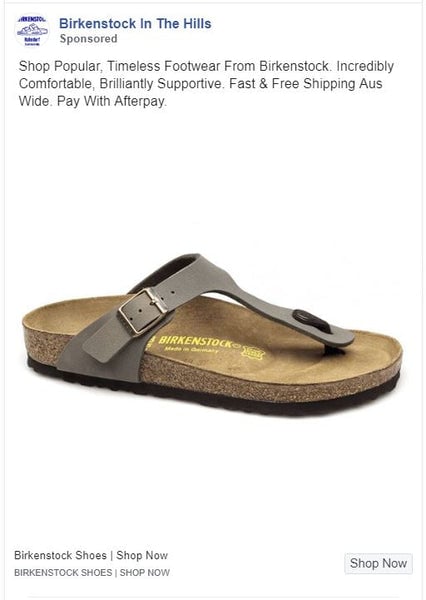
Here's an example of a clean and simple ad from Birkenstock Hahndorf. It's a good ad with a clear photo and description which communicates the benefits to customers.
Influencer marketing
Another tactic that works for driving traffic is influencer marketing. It can actually work out cheaper than ads as you can earn an average of $6.50 for every $1 you spend.
You earn about $2.65 for every $1 you spend on display ads.
But influencer marketing requires a bit more effort, as you need to spend time to vet influencers and work on a promotion plan with them.
But if you do decide to invest in influencer marketing make sure you use Instagram the most, as it generates the highest revenue.
Also, remember to team up with the right influencer. The right influencer needs to be relevant to your brand and should drive good levels of engagement. Here’s a good example of influencer marketing done right…
In this post, Fendi teamed up with Camila Coelho, a fashion influencer. As you can see in the post she promotes one of their handbags.
What I like most about the post is that it is a carousel post that shows the product in several pictures. Camila also describes the product clearly and includes a branded hashtag and Fendi’s handle. This will make it easy for her followers to find the product.
SEO
Influencer marketing and ads will get you some quick traffic. But along with these methods, you should invest in other forms of long term strategies. One of them is SEO. For this, you can use my aforementioned strategy to spy on your competitors and rank for the same keywords they are trying to rank.
There’s a lot of considerations when it comes to SEO, so consulting an expert agency like Optimising can help make sure your funds are well allocated to yield the most returns.
Content marketing
Another affordable way to drive traffic is content marketing, as it is easier to build backlinks and drive both search and social traffic to pages that aren’t promotional. You can use blog posts to promote your products.
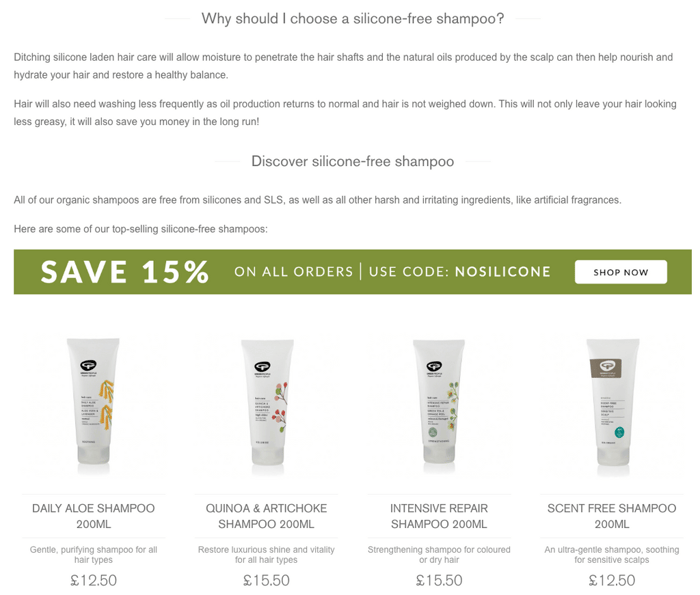
An example is this post from Green People, where they educate customers about the benefits of using silicone-free shampoos and what they should look for when buying. The post then suggests the Green People silicone-free shampoo range and why it's a perfect choice.
6. Track your funnel
The final step is to track your funnel and make improvements as you go along. Shopify has some really advanced built-in analytics that should uncover a wealth of information. You should be able to use it to understand your audience better, improve your site and conversion rates.
Final thoughts
These are our top ecommerce marketing strategies that we've seen work for Shopify stores. While every strategy may not be the right fit for your business, choose the ones you can start with and begin experimenting to see how it works for you.
Put more time and resources into what's working and soon you'll start to see your sales and traffic skyrocket.
So, go ahead and begin implementing these strategies.