
Table of Contents
- Shopify Pricing Guide
- 1. Shopify Pricing Tiers
- 2. Choosing the Right Shopify Plan
- 3. Additional Costs to Consider with Shopify Plans
- 4. Font Licensing
- 5. Shopify Transaction Fees
- 6. Buy Now, Pay Later (BNPL) Transaction Fees
- 7. Shopify Shipping Costs in Australia
- Third-Party Shipping Providers in Australia
- 8. Email Hosting
- 9. Marketing and Advertising
- 10. SEO
- Optimising Costs with Shopify
- FAQs
Welcome to the ultimate guide on Australian Shopify pricing for 2025! Whether you’re launching a new e-commerce store or looking to upgrade your current platform, understanding Shopify’s pricing structure is crucial.
With various plans tailored to different business sizes and needs, finding the right one can significantly impact your online success. This comprehensive guide will explore each Shopify pricing tier, compare features, and help determine which plan suits your specific requirements. Let’s dive in and find the perfect Shopify plan to propel your business forward!
Shopify Pricing Guide
1. Shopify Pricing Tiers
Choosing the right Shopify plan for your business requires a thorough understanding of your needs and goals. Shopify offers a tiered pricing structure with various plans tailored to different business sizes and requirements. Below, we break down the primary plans to help you determine which is most suitable for your Australian business in 2024.
Starter

Ideal for: Beginners testing their business idea
Price: $7 AUD/monthly
Card Rates: 5%
The Starter plan is designed for those just starting. It offers the flexibility to test your product or service's demand without a significant time or financial commitment. You can sell your products through various channels, including social media, email, SMS, WhatsApp, and even in person, allowing you to explore different sales strategies.
Standout Features:
A simple online store - including product pages, a contact page, and Shopify's fast and secure checkout
Linkpop - the link in bio tool designed for commerce to help you boost your sales through social media
Shopify POS Lite - to sell in person anywhere and accept payments with just your smartphone
Basic Shopify
Ideal for: For solo entrepreneurs
Price: $56 AUD/monthly
Card rates:
1.75% + 30¢ AUD online
1.95% + 0¢ AUD in person
2% 3rd-party payment providers
Once you've established a customer base and proven there is demand for your product, the Shopify Basic plan is a great option for you. It allows you to build a fully customisable online store with all the essential ecommerce features, plus additional tools like abandoned cart recovery, discount codes, gift cards, customer segmentation, and marketing automation, giving you the support you need to grow your business.
The basic plan also gives you full access to the Shopify App ecosystem to extend your store's functionality and access to over 60 reports to track your store's performance using standard analytics.
Standout Features:
Customisable website builder: You can tailor the appearance and functionality of your website to reflect your brand identity and choose from various pre-designed themes and templates.
Multiple sales channels: Start selling across various sales channels like (Amazon and eBay).
Inventory locations: Track inventory, fulfil orders, and sell products across up to 10 locations, including retail stores, warehouses, and pop-ups.
Shopify Shipping: up to 44.2% discounts on shipping rates and access to shipping labels through Shopify Payments. Print shipping labels using a standard printer.
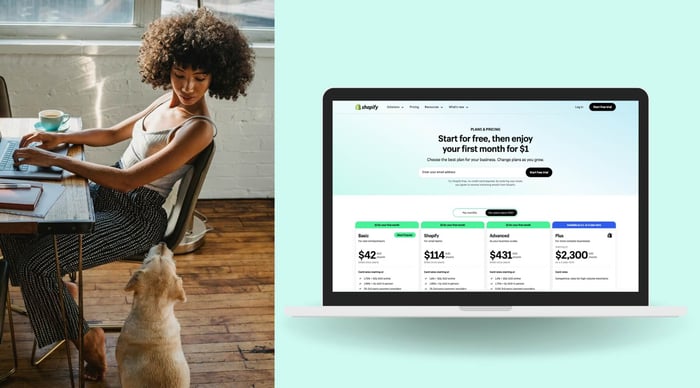
Start for free, then enjoy your first month for $1. Start free trial
Shopify
Ideal for: Small and medium businesses
Price: $149 AUD/monthly
Card Rates:
1.6% + 30¢ AUD online
1.85% + 0¢ AUD in-person
1% 3rd-party payment providers
The Shopify Basic plan is ideal for small and medium-sized businesses. It provides tools to delegate responsibilities as your team grows. It includes five staff accounts, allowing you to assign roles such as store manager, marketing specialist, inventory manager, customer service representative, and web developer, among others.
If you need custom development or integration with various third-party tools and services, the API access provided in the Shopify Basic plan is essential for automating processes and ensuring seamless integration with other software.
Standout Features:
Increased Staff Accounts: Collaborate with a larger team by having up to 5 staff accounts.
Seamless Integrations: integrate your favourite software tools and services, such as accounting software, CRM systems, and marketing platforms.
Automated Processes: Using API, you can automatically update inventory levels, process orders, and manage customer data, saving time and reducing manual errors.
Global Selling: Better tools for international commerce, including setting specific prices for different regions and managing multiple domains for different languages.
Start for free, then enjoy your first month for $1. Start free trial
Advanced Shopify
Ideal for: Growing businesses needing detailed insights
Price: $149 AUD/monthly
Card rates:
1.4% + 30¢ AUD online
1.75% + 0¢ AUD in-person
0.6% 3rd-party payment providers
As your business scales and your sales grow, you can take advantage of lower card rates and transaction fees. The Advanced Plan is ideal for larger businesses or those with more complex needs, offering enhanced reporting, advanced analytics, more staff accounts, and third-party shipping integrations.
Standout Features:
3rd-party Shipping Calculated Rates: Show calculated rates with your account or third-party apps at checkout
15 Additional Staff Accounts: Different departments may need access to the Shopify backend as your business grows. With more staff accounts, you can assign specific roles and permissions to each user.
10x Checkout Capacity: Let more shoppers check out simultaneously during big sales events. Assign anyone who exceeds capacity to a waiting room queue.
Shopify Plus
Ideal for: High-growth brands and enterprise-level with high sales volumes
Price: $2,300 USD/monthly on a 3 year term
Card rates: Competitive rates for high-volume merchants
Shopify Plus provides a more robust and scalable solution for high-volume businesses that require the highest level of customisation, support, and operational efficiency. This plan is the ultimate solution for managing B2B, up to 200 retail locations, and 50 international markets. Soon, with the reimagined markets, you can manage online, retail, and B2B from a single store and gain an overall view of your business through unified analytics.
The Shopify Plus plan offers all the features of the Advanced Shopify Plan, along with key Shopify Plus benefits such as dedicated account management, extensive customisation options, automation tools, unlimited staff accounts, and increased volume capabilities.
Standout Features:
Scalability: Shopify Plus can handle many transactions and products, making it suitable for enterprises with extensive product catalogues and high sales volumes.
Wholesale Channel: Create a separate, password-protected storefront for B2B customers with custom pricing and order requirements.
Launchpad: Schedule automated promotions, product releases, and online store updates.
Checkout Extensibility: Convert more buyers with advanced customisations to Shopify Checkout using powerful apps and branding tools.
Advanced API Access: Enhanced API access enables deeper integration with ERP, CRM, and other enterprise systems for more efficient data management and process automation.
Custom shopping experiences: Create custom shopping experiences for different international markets and B2B customers, tailoring their stores to the specific needs and preferences of each audience.
Shopify Audiences: Find high-intent customers at a lower cost. Create custom audiences based on data from your store and other Shopify merchants. These audiences can be used in Meta and Google, making your marketing efforts more effective.
2. Choosing the Right Shopify Plan
There are many factors to consider when selecting a Shopify plan. Remember to choose a plan that aligns with your business goals, needs, and budget. When selecting a Shopify plan, consider the following key factors:
Business Size and Revenue: Match the plan to your current sales volume and projected growth.
Features and Tools: Evaluate needed features like advanced reporting, staff accounts, and international pricing.
Budget: Balance between monthly costs and transaction fees.
Customisation Needs: Higher plans offer greater customisation and app integrations.
Scalability: Choose a plan that can grow with your business.
Start for free, then enjoy your first month for $1. Start free trial

3. Additional Costs to Consider with Shopify Plans
When considering Shopify pricing and plans in Australia, it's crucial to be aware of potential hidden costs that may arise beyond the standard Shopify monthly fees. While Shopify's transparent pricing structure provides a good baseline, additional expenses can accumulate based on how you customise and optimise your online store.
1.Domain Name Costs
Shopify pricing and plans do not include a custom domain. If you wish to have a unique domain name for your store, you'll need to purchase one, either through Shopify or a third-party provider. The cost can vary depending on the domain's popularity and extension. Here is a breakdown of the pricing of some of the most popular options among Shopify business owners in Australia:

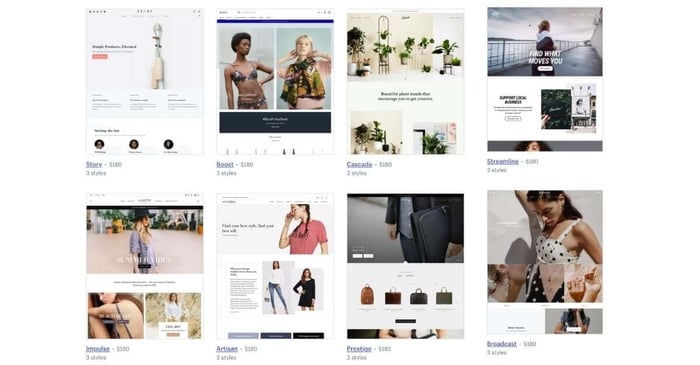
2. Shopify Themes

Free Themes: Available but limited in customisation.
Premium Themes: $150 to $380 USD one-time fee.
While Shopify offers a selection of free themes, premium themes with advanced features and customisation options come at an extra cost. Investing in a premium theme can provide your store a more professional and unique look, potentially boosting sales and customer engagement. Premium Shopify themes typically range from $150 to $380 USD.
Some of our favourite premium themes are Flex, Turbo by Out of the Sandbox and Impact by Maestroo. These themes offer all the essential ecommerce functionalities, great flexibility for customisation, incredible customer service, technical support and regular free theme updates and bug fixes.

Learn more: How to choose a Shopify theme
Learn More: Top Free & Paid Shopify Themes For Any Purpose
3. Shopify Apps

Shopify apps can significantly enhance your store's functionality, but it's essential to consider the potential Shopify app costs. While some apps are free, others may charge monthly fees, one-time fees, or additional costs for specific features.
As of 2024, the Shopify app store offers over 10,000 apps designed to improve various aspects of your store, including marketing, store management, store design, and order shipping.
Before installing any apps, take the time to research and budget for them. Remember, installing too many apps can quickly increase your Shopify app costs and may slow down the performance and speed of your ecommerce store. Just a 1-second delay in page load time could reduce conversions by 7% (Eggspert, 2021).
4. Font Licensing
When setting up your ecommerce site on Shopify, using the right fonts can make your store look professional and appealing. However, using fonts isn't just about picking a style you like; you also need to ensure you have the proper licences to use those fonts legally.
Free Fonts
We recommend using Shopify or Google fonts, which offer a vast library of free fonts optimised for fast loading times and cost-effectiveness.
Shopify Fonts: Shopify fonts are pre-integrated into the Shopify platform, Shopify takes care of all the legal and licensing aspects for their fonts.

Google Fonts: offers a vast library of free, open-source fonts that are easy to integrate into Shopify. Shopify’s platform includes built-in support for Google Fonts.

Web and Desktop Licence for Fonts
If you require custom fonts to match your brand’s aesthetic and have a unique look & feel, you’ll need to purchase a web and desktop licence.

Web Licence: A web licence allows you to use the font on your website. This licence type is necessary because it ensures the font can be displayed correctly and legally to your visitors online. When you purchase a web font licence, the provider will often give you a special file format (like WOFF or WOFF2) that is optimised for use on websites.
Why You Need It: Without a web licence, you risk legal issues if the font creator discovers their font is being used without permission. Plus, web-optimised fonts ensure your site loads faster and looks good on all devices.
Desktop Licence: A desktop licence allows you to install the font on your computer. This is important if you're using design software (like Canva or Illustrator) to create your site's graphics, logos, or other marketing materials. The desktop licence lets you use the font in these programs to create assets you can upload to your website.
Why You Need It: This licence ensures you can legally use the font in offline applications and create materials that match your website's look and feel. Without it, you can't legally use the font in any desktop-based design work.
Font Licensing Costs
Web Licence Costs: Typically range from $10 to $100 per year, depending on the font and the number of visitors to your site.
Desktop Licence Costs: Usually a one-time fee ranging from $20 to $100, depending on the fonts

5. Shopify Transaction Fees

When it comes to transaction fees, you have two choices: opting for Shopify Payments or third-party payment providers such as eway or Stripe.
Shopify Payments
Shopify Payments is Shopify's built-in payment processor. When you use Shopify Payments, you avoid paying additional transaction fees to Shopify. However, you'll still be responsible for paying credit card processing fees, which vary based on your Shopify pricing and plan:
Basic Shopify: 2.9% + 30¢ per online transaction
Shopify: 2.6% + 30¢ per online transaction
Advanced Shopify: 2.4% + 30¢ per online transaction
These fees apply to each sale made through your Shopify store.
Third-Party Payment Providers in Australia
If you choose to use a third-party payment provider instead of Shopify Payments, you will be charged transaction fees by Shopify in addition to the fees charged by the third-party provider. These Shopify transaction fees also vary based on your Shopify pricing and plan:
Basic Shopify: 2.0% per transaction
Shopify: 1.0% per transaction
Advanced Shopify: 0.5% per transaction
In addition, the third-party provider will have its own credit card processing fees around 1.75% + 30¢ per transaction, which can vary based on the volume and negotiation. Depending on the provider, these fees can be similar to or higher than Shopify Payments fees.
eWAY:
Fees: Typically charges 1.75% + 30¢ per transaction for domestic credit cards and 2.9% + 30¢ for international cards.
Integration: eWAY integrates smoothly with Shopify and offers features like fraud protection and payment gateway options.
Stripe:
Fees: 1.75% + 30¢ per transaction for domestic cards, 2.9% + 30¢ per transaction for international cards, plus an additional 1.15% for international card transactions.
Integration: Stripe is well-integrated with Shopify and is known for its ease of use, comprehensive developer tools, and support for a wide range of payment methods.
Learn more: eWay vs. Stripe: What’s the Better eCommerce Payment Gateway?
6. Buy Now, Pay Later (BNPL) Transaction Fees

Buy Now, Pay Later (BNPL) options allow customers to purchase products immediately and pay for them in instalments over time. While this can make purchasing more accessible for customers, it involves transaction fees that you, as a store owner, need to be aware of. These fees typically range from 3% to 7% of the transaction amount, plus a fixed fee per transaction, depending on the provider.
BNPL Provider | Merchant Fees |
Afterpay | 4-6% per transaction + $0.30 per transaction |
Klarna | 3-7% per transaction, depending on the payment plan. |
Zip Pay | 2-4% per transaction + $0.30 per transaction |
PayPal Pay in 4 | No additional merchant fees specific to PayPal in 4 beyond standard PayPal transaction fees (2.6% + $0.30 per transaction) |
Humm | 2.5-6% per transaction, depending on the type and volume of transactions |
7. Shopify Shipping Costs in Australia

Shipping can be a significant expense for online retailers. You can opt for Shopify shipping in Australia, which offers discounted rates, particularly for those on higher-tier plans. However, if you want additional options, several third-party shipping providers, such as Starshipit or Shipstation integrate well with Shopify in Australia.
Let's compare the costs of Shopify Shipping with the most popular third-party providers to find the best rates for your shipping needs:
Shopify Shipping
Shopify Shipping allows you to purchase and print shipping labels directly through your Shopify admin. Here’s how the costs are structured:
1.Partnered Carriers: Shopify Shipping partners with two main carriers in Australia:
Australia Post: Offers various services, including standard and express shipping for domestic and international deliveries. Costs depend on package dimensions, weight, and the destination.
Sendle: A courier service that specialises in door-to-door delivery with competitive rates for both domestic and international shipments, especially for smaller packages.
2. Discounted Rates: Depending on your Shopify plan, you can access discounted shipping rates:
Plan | Australia Post Discount | Sendle Discount |
|---|---|---|
Basic Shopify | 5% to 10% | 10% to 15% |
Shopify | 10% to 15% | 12% to 18% |
Advanced Shopify | 15% to 20% | 15% to 20% |
Shopify Plus | 20% to 30% | 20% to 25% |
3. Shipping Label Costs: When you purchase a shipping label through Shopify, the cost is determined by the carrier’s rates, including the discount provided by Shopify. The costs will vary based on the size, weight, and destination of the package.
4. Real-Time Carrier Calculated Shipping: Shopify offers real-time shipping rates at checkout, which means customers will see the actual shipping cost based on their location and package details. This helps you avoid overcharging or undercharging for shipping.
Third-Party Shipping Providers in Australia
If you prefer not to use Shopify Shipping, or you want additional options, several third-party shipping providers integrate well with Shopify in Australia:
1. Australia Post (Direct Integration)

Costs: You can integrate Australia Post directly with Shopify using third-party apps. Costs depend on the service selected (e.g., Parcel Post, Express Post).
Features: Offers a wide range of shipping options, including tracking, insurance, and international delivery. 2. DHL Express

Costs: Generally more expensive, especially for international shipments, but offers very reliable and fast service.
Features: Ideal for businesses with high-value items or international customers. Integration with Shopify can be done through apps like “DHL Express Commerce.” 3. CouriersPlease

Costs: Competitive pricing for metropolitan and regional deliveries within Australia.
Features: Focuses on quick deliveries with various service levels (standard, express). Integration with Shopify is possible through third-party apps. 4. Shippit

Costs: Variable rates depending on the courier selected through the platform (e.g., Fastway, TNT, CouriersPlease).
Features: Aggregates multiple couriers into one platform, allowing you to compare rates and delivery times. Offers live tracking and automated notifications for customers. 5. Starshipit

Costs: Subscription-based pricing with different tiers depending on the number of shipments per month. Prices typically start around AUD 30-50 per month for lower volumes and increase for higher shipment volumes.
Features: Integrates with a wide range of carriers, including Australia Post, CouriersPlease, DHL, FedEx, TNT, Sendle, Aramex, and UPS. Automates order fulfilment, including label printing, tracking, and customer notifications.
8. Email Hosting
Shopify does not provide email hosting as part of its plans. If you require professional email addresses associated with your domain (e.g., info@yourstore.com), you must invest in third-party email hosting services like Google, Microsoft or Zoho. This is an additional cost to factor into your overall budget.
9. Marketing and Advertising
Effective marketing is essential to drive traffic and sales. While Shopify provides some basic marketing tools, you might need to invest in additional advertising campaigns, such as Google Ads, Meta Ads, TikTok Ads or influencer marketing, to reach a wider audience. If you want to run ads on these platforms, it is important to know that the cost per ad varies by (CPC) cost per click or (CPM) cost per thousand impressions. Here is a breakdown of the approximate costs of running ads in Australia in 2024 on these platforms:

Image source: Google Ads
Google Ads:
CPC: Typically ranges from $1.50 to $3 AUD for most industries, but highly competitive keywords can go much higher.
Monthly Budget: Small businesses often start with a budget of $440 to $1,470 AUD per month.

Image source: Meta
Meta Ads (Facebook and Instagram):
CPC: Typically ranges from $0.75 to $3 AUD.
CPM: Typically ranges from $7.50 to $22.50 AUD.
Monthly Budget: Small businesses often start with a budget of $300 to $1,470 AUD per month.

Image source: TikTok
TikTok Ads:
CPC: Typically ranges from $0.15 to $1.50 AUD.
CPM: Typically ranges from $1.50 to $15 AUD.
Minimum Budget: TikTok requires a minimum budget of $75 AUD per day for campaigns.
10. SEO
As a Shopify business owner, it's important to understand the costs associated with Search Engine Optimisation (SEO). SEO helps your Shopify store rank higher in search engine results, making it easier for potential customers to find you. The higher your store ranks, the more likely people will click on it.
Unlike paid ads, which stop generating traffic once you stop paying, SEO can drive organic traffic over time. This means you can achieve lasting results without ongoing costs.
SEO costs can vary based on your business needs, the level of competition in your industry, and whether you handle SEO in-house or hire professionals. If you’re handling SEO in-house, you might spend between $50 to $300 per month on tools like SEMrush, Ahrefs or Moz for keyword research and analytics.
Learn more: Shopify SEO in 6 easy steps
Optimising Costs with Shopify
Pay Annually instead of Monthly 25% Savings
When deciding on your Shopify pricing, opting for annual payment instead of monthly billing can offer significant savings. This approach can save you up to 25% on total costs, which can be particularly beneficial for businesses looking to manage their expenses effectively. If you are in Shopify Plus, you can save by opting for a one —or three-year term pricin
FAQs
What are the current Shopify pricing plans in Australia?
Shopify offers three main subscription tiers tailored to different business sizes. As of 2025, Australian merchants are billed in AUD, removing the need for currency conversion fees.
Basic Shopify: Ideal for solo entrepreneurs and new businesses.
Shopify: Best for growing businesses with small teams.
Advanced Shopify: Designed for scaling businesses requiring advanced reporting and lower transaction fees.Each plan includes an online store, blog, and access to 24/7 support.
How much does Shopify Plus cost for enterprise businesses?
Shopify Plus pricing is designed for high-volume merchants and enterprise brands. Unlike the standard plans, Shopify Plus pricing generally starts around $2,500 USD per month (converted to AUD) for standard setups and setups. For higher-volume merchants, the cost may transition to a variable fee based on a percentage of your monthly sales volume. This plan includes exclusive access to Shopify Scripts, advanced B2B features, and dedicated support.
Are there extra costs for Shopify POS (Point of Sale)?
Yes and no. Shopify POS pricing depends on the version you choose. Shopify POS Lite is included for free with all Shopify plans, allowing you to accept payments in person at pop-ups or markets. However, if you have a permanent retail store, you will likely need Shopify POS Pro, which incurs an additional monthly fee per location. This upgrade unlocks advanced inventory management, staff permissions, and omnichannel selling features.
Do I have to pay transaction fees on top of my monthly subscription?
This depends on your payment gateway. If you use Shopify Payments, you pay $0 in transaction fees (you only pay the standard credit card processing rate). However, if you choose to use a third-party payment provider (like PayPal or Afterpay) without Shopify Payments enabled, Shopify charges a transaction fee ranging from 0.5% to 2% depending on which plan you are on.
Is it cheaper to pay for Shopify monthly or yearly?
Yes, opting for Shopify annual pricing typically secures you a significant discount—often around 25% off the total cost compared to paying monthly. This is a great way to lower your overheads if you have the capital to pay upfront.
How much does a custom domain cost on Shopify?
A Shopify domain price generally starts at approximately $18 to $25 AUD per year for standard domains (like .com or .com.au). You can purchase a domain directly through Shopify for seamless integration, or connect a domain you bought from a third-party provider like GoDaddy or Namecheap at no extra cost.
How does Shopify pricing compare to competitors like Wix?
When looking at Shopify vs Wix pricing, Wix often appears cheaper for basic content websites. However, for serious ecommerce, Shopify offers better value due to its robust app ecosystem, inventory management, and scalability. While Shopify website prices might be slightly higher initially, the built-in sales tools often result in a higher ROI for merchants focused on growth.